

5 min read
The Art of Concealment: Freeports and Money Laundering
 Ashilee Schreiber
:
January 20, 2026
Ashilee Schreiber
:
January 20, 2026
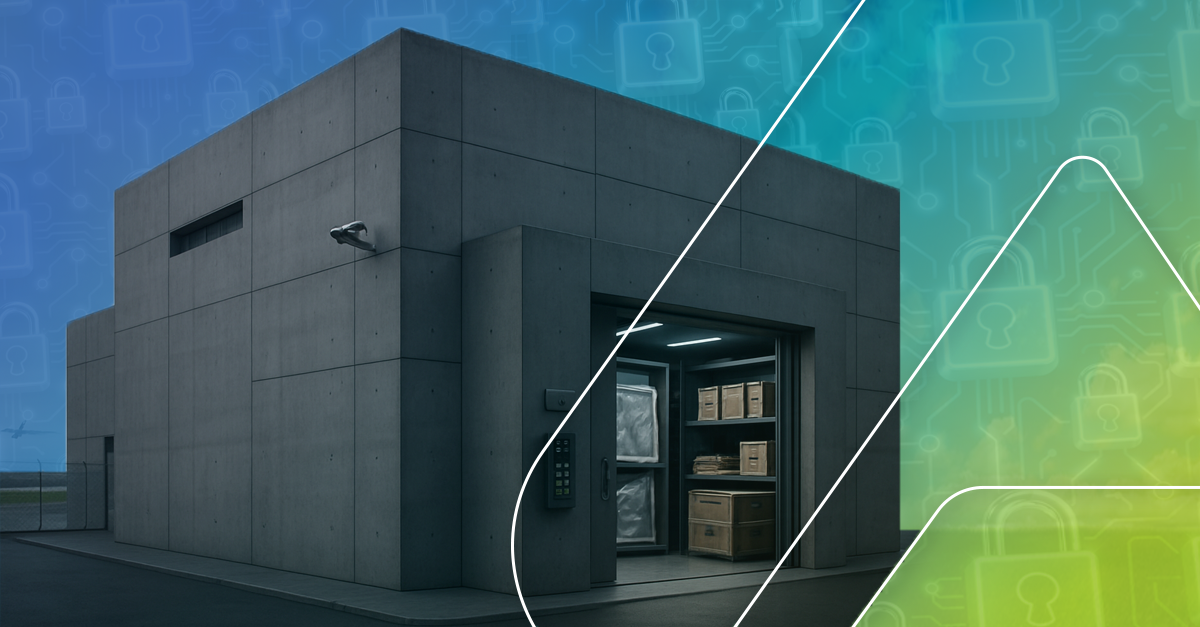
Freeports, while legal and economically beneficial, have become a critical blind spot in the fight against global money laundering. Their unique legal status, coupled with their appeal to the ultra-wealthy, has created an environment ripe for abuse. As the financial and art worlds become increasingly interconnected, freeports serve as both a tool and a symbol of the power of money; a system that all but encourages wealth to be hidden, moved, and laundered with minimal oversight.
In the world of global trade and finance, few entities are as mysterious and under-scrutinized as freeports. These customs-exempt storage facilities promise confidentiality, tax deferral, and tight security for goods ranging from fine art to rare wines and precious gems. Originally designed to ease cross-border trade, they have evolved into ultra-secure vaults for the world’s wealthiest individuals. Today, mounting evidence shows they are not just storage spaces, but powerful tools for money laundering. Freeports collectively hold billions in high-value assets, operating with an unparalleled level of secrecy and minimal regulatory oversight, making them a prime target for those seeking to conceal illicit wealth.
What Are Freeports?
Freeports, also known as “bonded warehouses” or “customs-free zones”, are secure facilities where goods can be stored, bought, and sold without incurring taxes or customs duties until they leave the premises. These zones exist across the world, from Geneva and Luxembourg to Singapore and Dubai, and are often located near ports or airports to facilitate international logistics.
The concept of the freeport is also not new. As early as the 2nd century BCE, the island of Delos in ancient Greece was established as a duty-free port under Roman rule, allowing goods to circulate without tariffs. During the Middle Ages, Venice created a customs-free zone to encourage maritime trade, and in Hamburg, a freeport district was formalised in 1888; this coincided with the creation of the Geneva Freeport, considered the first modern freeport. Unlike its predecessors, Geneva offered long-term, secure storage for high-value assets under a form of “customs suspension”. This ushered in a new era of trade infrastructure designed not just for efficiency, but for discretion, financial privacy, and, ultimately, obfuscation.
The 21st century freeport is used by ultra-high net worth individuals to store high-value, assets, such as artwork, vintage cars, jewellery, precious metals, and rare collectibles. These assets can remain in freeports for years, changing ownership multiple times without ever physically moving and, therefore, completely bypassing standard customs checks and financial scrutiny.
The Popularity of Freeports
The popularity of freeports can be linked to three key characteristics: anonymity, tax avoidance, and security.
- Anonymity: Freeports often allow ownership to be registered under shell companies, trusts, or intermediaries. This makes it exceptionally difficult to trace the true beneficial owner of an asset.
- Tax Avoidance: Goods stored in freeports are not subject to VAT or import/export duties until they exit the facility. In practice, this means assets can be bought and sold indefinitely within the freeport without triggering any taxable event.
- Security and Stability: Freeports have state-of-the-art surveillance, temperature-controlled environments, and political neutrality, appealing to collectors, investors, and, increasingly, those with criminal intent.
How Freeports Enable Money Laundering
Freeports are ideally structured to facilitate money laundering, particularly through the art market.
- Art as a High-Value, Portable Asset
Artwork such as paintings, sculptures, and rare collectibles can hold immense value while remaining physically portable and easy to store. For example, Van Gogh’s Sunflowers series, roughly the size of a movie poster and worth over £150 million, illustrates how individual pieces can concentrate wealth discreetly. High-value portability makes art an attractive vehicle for moving illicit wealth across borders without triggering conventional financial monitoring.
- Opacity in Ownership and Valuation
Freeports enable complex ownership structures that obscure beneficial owners. Art lacks standardized pricing, and valuations depend on subjective market perception. Criminals can, and often, manipulate prices through related-party transactions, effectively layering illicit funds. Difficulty in verifying provenance and true ownership creates blind spots for KYC and source-of-wealth checks, increasing exposure to laundering schemes.
- Tax and Customs Advantages
Art stored in freeports avoids VAT and import duties until it exits the facility, allowing repeated trades without taxable events or customs declarations. This tax deferral and regulatory gap facilitate layering and integration stages of laundering, as transactions remain outside traditional financial reporting frameworks.
- Use of Artworks as Collateral
Art held in freeports can secure loans without leaving the facility, granting criminals access to “clean” liquidity while retaining control of illicit assets. Financial institutions face heightened risk when accepting art as collateral without robust valuation and provenance checks, as this can disguise illicit origins.
- Delayed or Non-Disclosure of Transactions
Private sales within freeports often lack public disclosure, enabling large wealth transfers with minimal transparency. Limited audit trails and fragmented data make it challenging for investigators to trace ownership history, detect suspicious patterns, or assess legitimacy of funds.
In short, art is an ideal vehicle for laundering illicit funds, and a freeport is the perfect place to do it.
Case Studies and Investigations
- The Geneva Freeport has been the subject of multiple investigations. A 2016 Swiss government report revealed that the facility housed over 1.2 million works of art, many of which lacked proper documentation of origin, or ownership. Other investigations, art market reports, and leaked information provide small glimpses into the priceless works hidden in plain sight.
These include masterpieces such as:
- Amedeo Modigliani’s work Seated Man with a Cane, with an estimated value of US$25 million, was once looted during World War II and later discovered in the freeport. Reports have detailed works by Pablo Picasso, Claude Monet, and contemporary artists like Jean-Michel Basquiat.
- Beyond paintings, the facility stores looted antiquities, including Roman sculptures and Mesopotamian tablets trafficked from conflict zones such as Syria, Iraq, and Libya.
- The freeport also houses rare collectibles like vintage wines, luxury watches from brands like Patek Philippe, and jewelry/stones.
- Le Freeport Singapore, opened in 2010 near Changi Airport, has attracted scrutiny as part of wider concerns about freeports globally. In 2018, the European Parliament highlighted the risk that such facilities could enable tax evasion and money laundering because of limited transparency and regulatory oversight. Although Singaporean authorities and the operators of Le Freeport have denied any wrongdoing, critics often describe freeports, including Singapore’s, as highly opaque environments sometimes referred to as “black holes” for financial transparency.
- The Panama and Pandora Papers leaks revealed how offshore entities and intermediaries have exploited freeports to conceal wealth. Documents released by the International Consortium of Investigative Journalists (ICIJ) showed that shell companies used the Geneva Freeport to store and trade artwork worth millions of pounds, without the knowledge of local tax authorities.
Regulatory and Legal Challenges
Efforts to regulate freeports face several challenges:
- Jurisdictional complexity: Freeports operate under national customs laws but are influenced by international trade norms, making enforcement difficult.
- Governmental resistance: Countries hosting major freeports often benefit economically from the influx of wealth and are resistant to regulatory changes.
- Lack of global standards: There is currently no unified framework for AML compliance, ownership transparency, or reporting obligations in freeports.
Organizations like the Financial Action Task Force (FATF) and Transparency International have repeatedly highlighted these concerns. FATF recommends that art dealers and storage facilities adopt KYC protocols and report suspicious transactions, but compliance remains inconsistent.
Efforts to Reform Freeports
In recent years, there has been growing international pressure to improve transparency in freeports.
- The European Union’s 2020 report warned that freeports “pose a high risk of money laundering” and urged tighter regulation, including mandatory disclosure of beneficial ownership.
- The Organization for Economic Co-operation and Development (OECD) and G20 have endorsed stronger global standards for transparency and tax compliance, promoting information-sharing frameworks such as the Common Reporting Standard.
- Switzerland has introduced stricter due diligence requirements. The Geneva Freeport, for example, must maintain detailed inventories for artworks imported after 2009, including origin, value and authorized owner details.
However, these reforms are inconsistently enforced. Without global cooperation and binding regulatory obligations, freeports will likely continue to serve as safe havens for illegal wealth.
In Summary
If the international community is serious about combating financial crime, it must confront the role of freeports head-on. This means regulatory bodies enforcing stricter due diligence, requiring full disclosure of beneficial ownership, and promoting international standards that prioritise transparency over secrecy. Without such reforms, freeports will remain fortresses of incalculable wealth, shielding criminals under the facade of legitimate, legal commerce.